
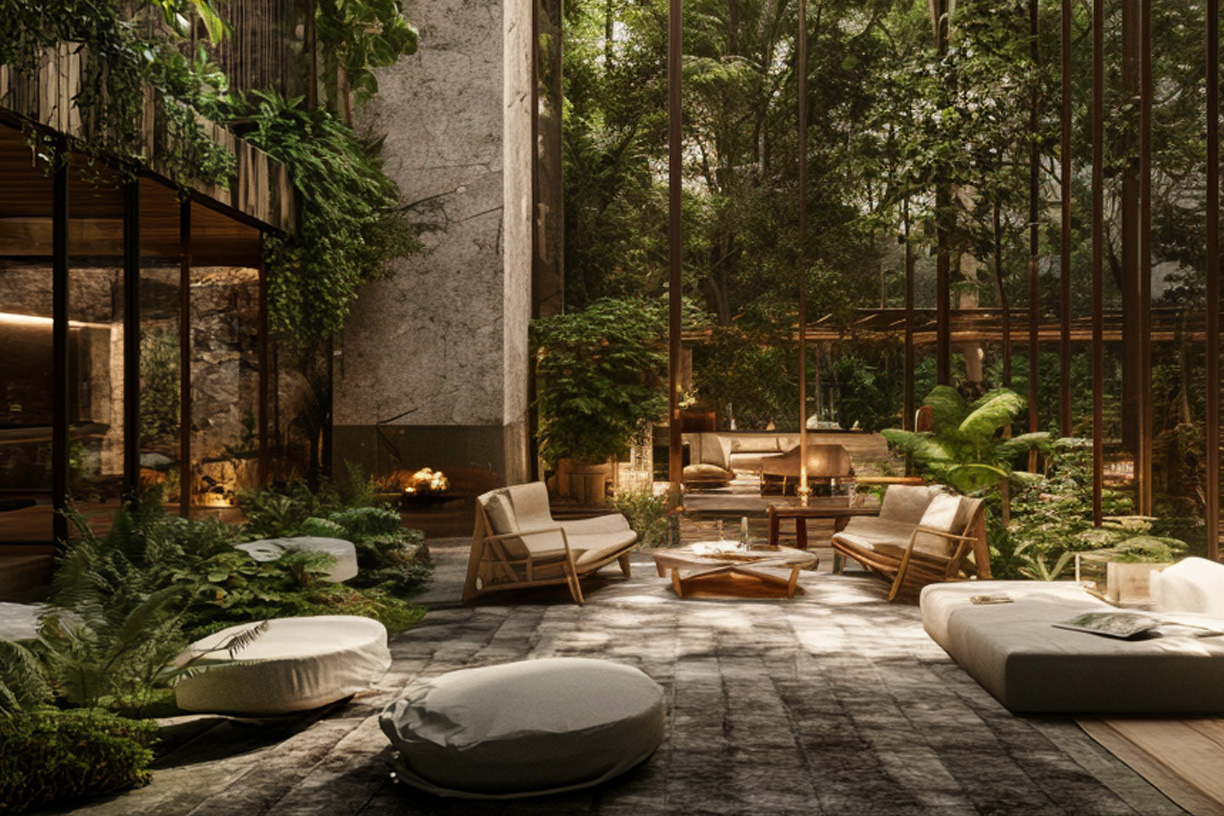

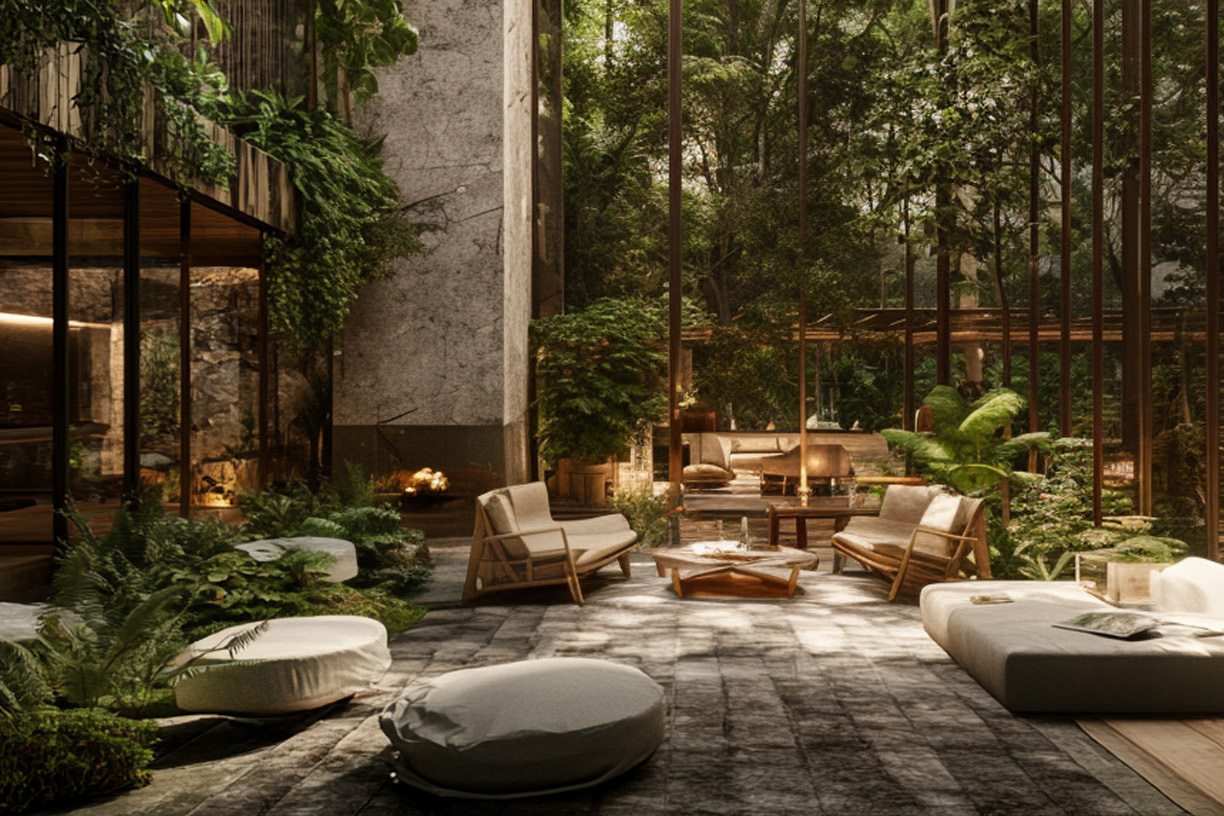
This piece explores why outdoor spaces should be approached with the same care, clarity, and emotional intelligence as any interior room — because great gardens don’t follow the home, they complete it.
Walk through the average home renovation and you’ll find layer upon layer of thought applied to the interiors: floor plans, lighting schemes, material palettes, furniture placement, mood boards, textures, tones, sightlines, and functionality. Every room is considered in terms of how it will be used, how it will feel, and how it will evolve with the people who live there.
Step outside — and the story changes. The garden, often treated as the final checkbox or a “bonus space,” is too frequently handed off without the same rigour. It’s approached as an exterior feature, not an integral part of the home.
But this is a missed opportunity.
At its best, the garden is not an accessory. It is a room of the home — a flexible, immersive, ever-changing one. And it deserves to be designed with just as much care, clarity, and intelligence as any interior space.
The Garden as Living Architecture
Just as the interior defines how we move, work, rest, and connect, the exterior does too. Only it adds something more: sensory experience, connection to weather and season, and the biological recalibration we get when immersed in natural systems.
Designing the garden with interior-level precision means:
- Considering layout and circulation, just like a hallway or lounge.
- Balancing privacy and openness, like we would with walls, windows, and doors.
- Using texture, contrast, and rhythm to control mood and movement.
We don’t just design patios. We design spatial experiences. We layer movement, materiality, and meaning into the landscape — in the same way an architect layers structure, volume, and light into a building.
When done well, a garden doesn’t support the home. It completes it.
Flow and Function, Outside In
In interior design, we obsess over flow. Kitchen to dining, bedroom to bathroom, social space to private. But that flow should extend to — and through — the garden.
A well-designed outdoor space considers:
- How people transition between inside and out.
- What each zone invites you to do — sit, cook, play, pause, gather.
- How the materials relate — interior flooring that bleeds into terraces, timber that wraps from ceiling to canopy, tones and textures that harmonise.
When the transitions are smooth, the boundaries between house and garden begin to dissolve. The home expands. Not just visually, but experientially.
One client told us their redesigned garden became their favourite ‘room’ — because it felt designed with the same thought as their kitchen, but gave them more freedom, more calm, and more connection to life.Mood, Texture and Light
Interior designers work masterfully with light — both natural and artificial. They think in terms of atmosphere, reflection, material softness, and contrast. Garden design should do the same.
We consider how sunlight travels through the garden — how shadows fall, how texture catches golden hour, how movement dances through leaves. We curate experience:
- Soft planting to invite rest.
- Sculptural elements to mark focal points.
- Layered lighting to extend use and shape evening mood.
Just as a dimly lit room can soothe or stifle, a poorly considered garden can feel hostile or flat. But when light, texture, and atmosphere are choreographed, the space sings — quietly but unmistakably.
The Emotional Blueprint of Home
Interiors are designed not just to look good, but to feel good. Comfort. Warmth. Sanctuary. Productivity. A great room isn’t just decorated — it’s intentional.
Your garden should be no different. A place that lifts the senses in spring, softens stress in summer, holds stillness in winter. That supports who you are, not just what you want it to look like.
We’ve worked with families navigating grief, renewal, new life, and everyday chaos. In every case, the garden wasn’t just a bonus space. It was a coping space, a growth space, a sacred space.
That doesn’t happen by accident. It happens by design.
Why Clients Deserve Better
Too many homeowners spend time and money crafting the perfect interiors, only to step outside into a space that feels like an afterthought. This isn’t a judgment — it’s an industry-wide legacy. For decades, the outside was left to landscapers. The inside was left to designers. And few connected the two.
But we’re entering a new era. One where gardens are recognised not just as decorative, but as essential. To wellbeing. To property value. To how we live.
When a garden is designed like an interior — with attention, foresight, and emotional intelligence — it stops being something you maintain. It becomes something you experience.
It becomes home.
Optional Add-Ons for Publishing
Meta Description (SEO): Why gardens deserve the same design attention as interiors — and how treating them as part of the home changes everything.
Suggested Social Post (LinkedIn / Website Intro):
We don’t ask whether kitchens or living rooms deserve design — so why do we question it with gardens? This blog reframes outdoor space as one of the most valuable ‘rooms’ in the home.
Pull Quotes for Visuals or Social Use:
- “We don’t just design patios. We design spatial experiences.”
- “The garden isn’t an add-on. It’s part of the home’s emotional blueprint.”
- “When a garden is designed like an interior, it becomes something you experience — not just maintain.”