

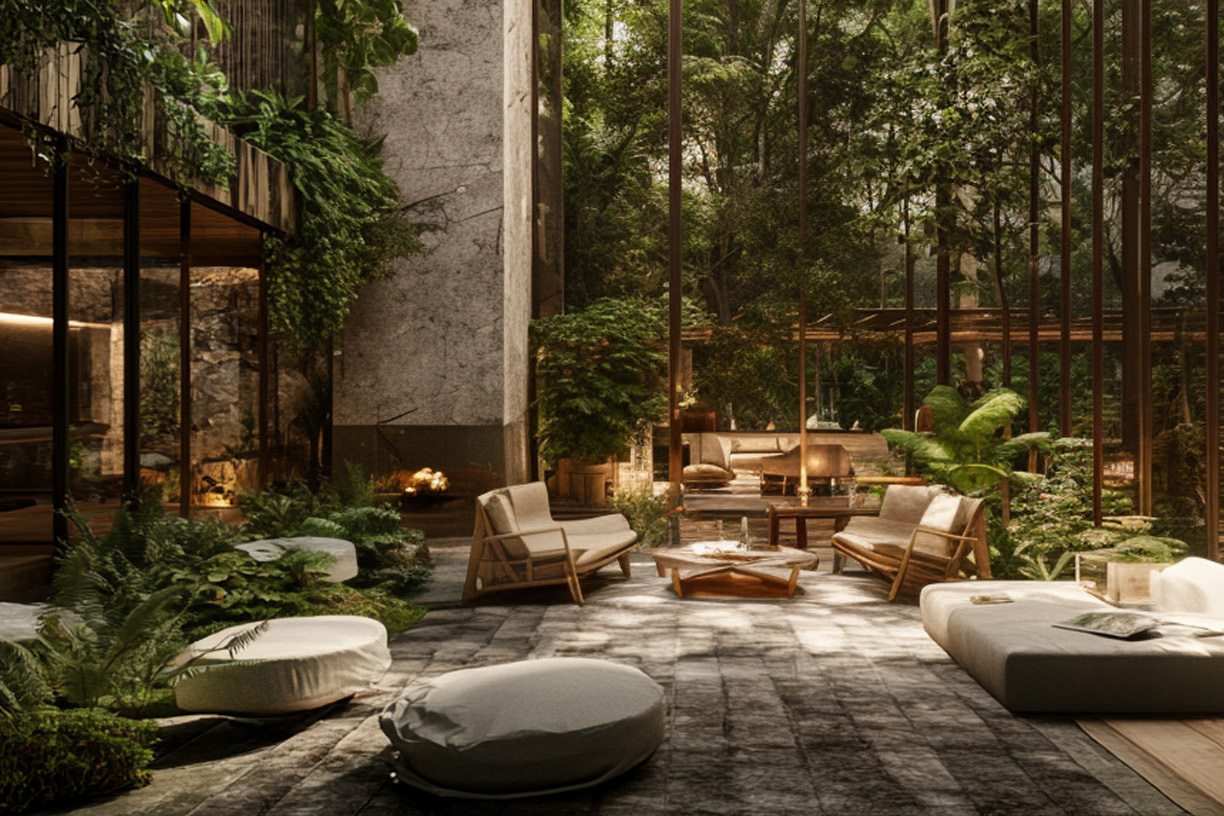
We are standing at a threshold. Not just in the world of design, but in how we see the places we live — and the lives that unfold within them. For decades, gardens have been seen as optional: a finishing touch, an afterthought, an aesthetic bonus to a home. But that time is ending.
A new era is emerging. One where garden design is no longer a luxury or accessory — it is foundational. It shapes how we live, how we feel, how we connect, and how we impact the world around us. This shift isn’t about style. It’s about values. And it’s long overdue.
From Landscaping to Living Architecture
The term ‘landscaping’ has long implied surface work — levelling, planting, paving — tidying the outdoors so it appears complete. But real design begins long before that. It begins with asking: what does this place need to become?
Architecture balances beauty with practicality. It’s shaped by light, views, movement, and atmosphere. When garden design is done right, it does the same — not as surface work, but as spatial experience.
In this new era, we are seeing gardens that don’t just frame a house. They elevate it. They challenge it. They soften its edges and stretch its spirit. They create places not just for people to move through, but to become part of. That is the opportunity we have in front of us.
Take, for example, a recent project where the house had already been designed and approved. The clients brought me in late — after the internal spaces were locked in. There was limited visual connection to the outdoors, awkward circulation, and little sense of sanctuary. We reworked the rear terrace layout, introduced layered planting that extended sightlines from deep within the house, and added a low, wraparound wall that mirrored the materiality of the architecture. The result? A space that felt twice as large — and infinitely more liveable.
Had we been involved earlier, the indoor–outdoor connection could have been even more profound. But even as a retrofit, it proved the power of spatial thinking beyond the four walls.
A Space That Reflects — and Reshapes — Life
Your garden is not just the land outside your door. It is a living, changing part of your daily experience. It’s where children grow up. Where ideas are shared. Where rest happens. Where people reconnect with each other and with nature.
When we begin to treat gardens as essential architecture, we design them with that emotional and functional depth in mind. We don’t just ask “where should the patio go?” — we ask “how should this space make you feel, and why?” (We explore this in more depth in Blog 3: Form, Function, and Feeling.)
That question shifts everything. Suddenly, we’re not talking about surfaces. We’re talking about rituals. Movements. Transitions. Seasons. We’re shaping something that grows alongside a home, adapting with it, serving not just now — but ten, twenty, fifty years from now.
Gardens, when considered fully, offer the rare luxury of presence. They slow time. They remind us of what’s cyclical, what’s worth nurturing, and what it feels like to belong to a place. No amount of indoor décor can replicate that.
Why This Shift Matters
The way we build and live is being redefined. Climate change, mental health, biodiversity collapse, social fragmentation — all of these pressures ask one thing of design: be better. Be smarter. Be more sensitive. Be part of the solution.
A 2023 UK study found that access to green space within 100 metres of a home reduced reported feelings of stress and anxiety by over 20%. Meanwhile, urban biodiversity corridors are being shown to significantly boost local pollinator populations, while improving stormwater resilience.
Garden design — when done well — answers that call. It becomes more than aesthetics. It becomes climate mitigation. A wildlife corridor. A healing space. A social anchor. A reason to be outside, together, daily.
And that requires a designer who doesn’t just know plants — but understands people. Who understands architecture. Who can read space, time, and feeling. In other words, someone who thinks beyond landscaping.
Shifting the Brief, Shifting the Outcome
When outdoor spaces are brought into the conversation early — at planning stage, not afterthought — everything changes.
The architecture becomes more integrated. Sightlines open. The house breathes. Materials align. And the garden doesn’t fight the building, it completes it.