

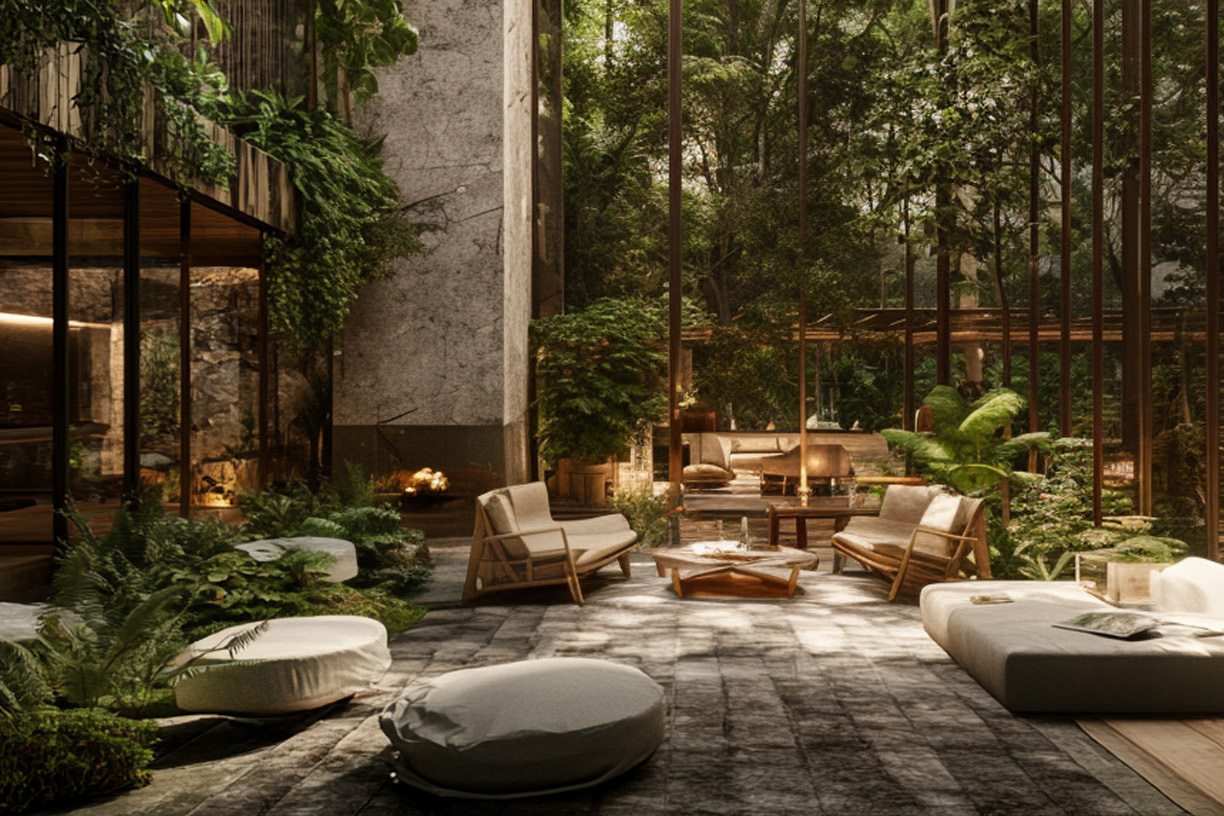
Why real beauty goes beyond looks.
Timeless gardens aren’t born from trends. They’re shaped by intention — grounded in three essential pillars that govern how space is experienced and remembered: form, function, and feeling.
These pillars are not separate elements; they are interdependent forces. When balanced, they produce gardens that look beautiful, live beautifully, and age with grace. When one is missing, the result is often hollow — attractive perhaps, but shallow in experience.
Designing a timeless garden is not about resisting change — it’s about designing with change in mind. These spaces are never static. They respond to seasons, to lives unfolding, and to the subtle shifts in how we use and understand our homes over time.
“Good gardens are beautiful. Timeless gardens are balanced — shaped not just to impress, but to serve and endure.”
Form: The Language of Shape and Structure
Form is the first thing we see — the geometry of the space, the outlines that hold movement and intention.
It defines how a garden breathes. How it draws the eye, or slows the body. Form is the framework that creates order or evokes rhythm. It might be a bold line of paving, a curved path that invites exploration, or a tree placed with such precision it anchors the entire space.
Good form allows the garden to feel whole, even before it’s filled in. It gives a space its skeleton — and a sense of belonging within its surroundings.
A well-formed garden guides behaviour intuitively. You don’t need a sign to know where to sit or where to walk — your body just follows the cues. This is the art of subtle architecture in the landscape.
In one project, a tight urban plot was reshaped by a single, sweeping arc that extended from the kitchen doors and curved around a central seating area. That one gesture softened the geometry, altered the way light moved through the space, and made the garden feel twice its size.
“Form is what the space rests upon. Get it wrong, and everything else will feel off — even if you can’t say why.”
Function: Purpose Designed In
Function is often misunderstood. People think it means “practical” — and therefore plain. But in great garden design, function is freedom.
It’s the reason you can enjoy your garden year-round. It’s the difference between a space that works with you — or one that constantly pushes back.
True functionality considers:
- Circulation and accessibility
- Where people gather, pass, or pause
- How zones flex over time — from toddlers to teenagers, solitude to sociability
- The level of maintenance the space requires
A garden can be sculptural and expressive — but if there’s nowhere to sit comfortably, if the lighting doesn’t support use after sunset, or if planting blocks natural flow, it won’t be loved.
In another garden, the brief was to create a calm, low-maintenance space for a retired couple. But the design anticipated change — a modular bench system was built in that could later accommodate grandchildren, group seating, or be removed entirely to make space for planters. That foresight turned utility into quiet confidence.
Function gives meaning to the beauty. It ensures that beauty isn’t wasted.
“We design for lives in motion, not just for moments of admiration.”
Feeling: The Most Overlooked Element
Feeling is where gardens become personal. It’s the emotional resonance that makes a space memorable — the warmth, stillness, vibrancy, or intimacy it evokes.
This is the pillar that connects people to place.
It’s not about mood boards or trends. It’s about the unseen layers of design that make you feel held, open, grounded, inspired. It’s how texture underfoot slows your pace, how a breeze carries scent across a shaded bench, how birdsong filters through layered planting.
A garden may function perfectly and look incredible — but if it doesn’t evoke feeling, it remains empty. Feeling is the soul of timeless design.
One client spoke of how they felt “relieved” every time they stepped outside — not because it looked polished, but because it made them feel free. The materials were warm underfoot. The planting rustled just enough to make space for silence. It was their favourite place to be, even in rain.
“Design becomes powerful when it connects the outer space to the inner life.”
The Hidden Cost of Imitation
Not every garden that looks good has been well designed. In fact, many that photograph beautifully are difficult to live with — too rigid, too busy, or simply unsuited to the lives unfolding within them.
Copying a space without understanding the context behind it is like buying a tailored suit in the wrong size. From a distance, it might impress. But it won’t fit your life.
True design comes from understanding — of place, of people, of purpose. That’s why the pillars of form, function, and feeling matter. They ground the design in something deeper than style.
How These Pillars Evolve Over Time
Timeless gardens don’t resist change — they embrace it. The form holds its clarity, but the planting matures. Function adapts to lifestyle shifts. Feeling deepens as memories accumulate.
A space designed with integrity can evolve. That curved path may lead to a different focal point one day. A quiet corner used for yoga now might become a reading spot or a grandchild’s hideaway later. The space flexes, but its essence holds.
Designing for longevity means designing for change with grace — and this is where true value lies.
The best gardens tell stories not just of plants, but of people — who they were, how they lived, and what they valued. Paths worn smooth by habit, favourite seats warmed by sun, borders expanded or reshaped over time — these are not flaws. They’re the signature of a life lived in tune with place.
Why All Three Must Coexist
These three pillars are not checkboxes — they are a design trinity.
- Form alone becomes sculpture.
- Function alone becomes utility.
- Feeling alone becomes indulgence.
Together, they create balance — spaces that feel as good as they look, and work as well as they last.
Timeless gardens are not built on guesswork. They’re shaped with care and clarity — not for perfection, but for presence.
“When form supports function and feeling, a garden becomes more than a space. It becomes a part of your life.”
What You See Differently Now
Look at your garden. What’s its form? How do you use it? And how does it make you feel?
Imagine it in 10 years. What traces of your life would it hold? What rituals might unfold within it? What memories will it carry forward?
Because the gardens that stand the test of time aren’t the ones that follow trends. They’re the ones that follow truth — in structure, in purpose, and in soul.
Spend time in your garden this week. Don’t just look at it — move through it. Listen to it. Ask how it’s helping you live. You might be surprised by what it tells you back.
Meta Description: The most enduring gardens are built on three design pillars: form, function, and feeling. Here’s how to balance them beautifully.